Two paid logic games that ask completely different things of you
Mini Metro and Bridge Constructor Portal both sit in the same corner of Google Play: bought once, no advertising, no daily timer. Past that they have almost nothing in common, and the table below is the fastest way to see why.
Qovrenza · Canada · store data read 7 September 2026
01At a glance
The two, line by line
| Point | Mini Metro | Bridge Constructor Portal |
|---|---|---|
| Price on Google Play | $1.59 CAD | $2.79 CAD |
| Advertising | None | None |
| In-app purchases | None listed | Listed on the store page |
| What a session is | One unbroken run until the network jams | One level, restarted until the bridge holds |
| Failure | Gradual, and it is the ending | Immediate, and it is the feedback |
| Ends? | No fixed end; the run stops when you do | Yes, sixty levels with a final one |
Price, advertising and purchase labels read from the Canadian Google Play listings on 7 September 2026. The remaining rows are our own description of playing them.
02Reading it
What the table cannot show
The two prices are close enough to be irrelevant to the decision. The interesting row is the third one: one game still lists in-app purchases after you have paid for it, and the other does not.
That is worth reading correctly. It does not mean the paid game withholds content until you pay again. It means the store page carries the label, and the label is the only honest thing to report from outside. What sits behind it may be a hint pack, a level bundle or a cosmetic set, and it can change with any update.
The second thing the table flattens is what failure means. In Mini Metro a jammed station is the end of the run and the score you take away. In Bridge Constructor Portal a collapsing bridge costs you nothing at all — you rebuild and try again, and the game expects you to fail perhaps ten times per level. Somebody who finds the first exhausting often finds the second relaxing, and the reverse is just as common.
The last row matters if you like finishing things. One of these has a last level and credits. The other has a high score that you will beat and then beat again, forever, which is either the appeal or the reason to skip it.
03First title

Mini Metro
Dinosaur Polo Club
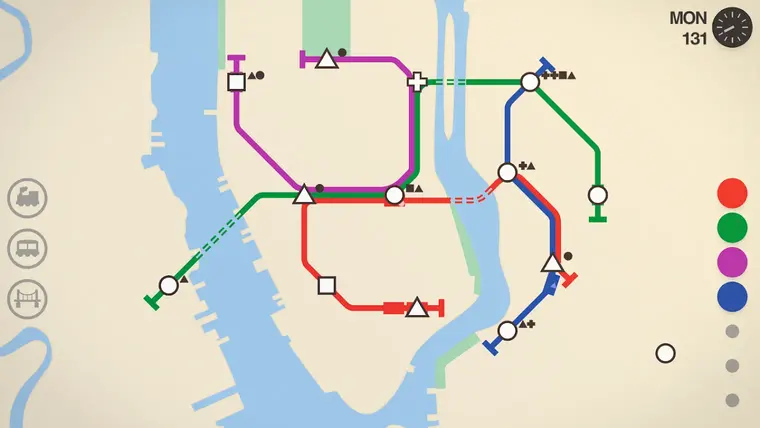
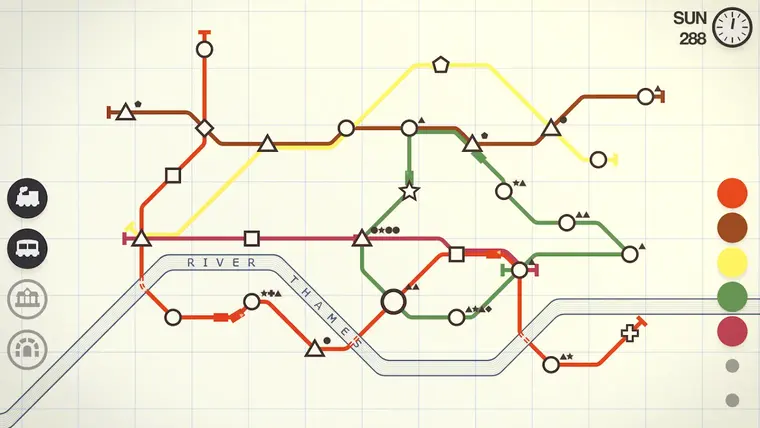
You are handed a river, three stations and a couple of lines. Passengers appear as shapes and want to reach a station of their own shape. You draw the line that takes them there. Then a fourth station appears, then a tenth, and the map you drew when it was simple becomes the reason it is now failing.
Every week the game gives you a small choice: another carriage, another line, a tunnel, an interchange. It is never enough for everything, so each decision is a bet on where the city grows next. That is the whole game, and it is unusually clean.
The interface is a subway map and nothing else — no menus during a run, no numbers except the passenger count. It reads perfectly on a phone, which is rare for a strategy game, and it works with the sound off.
- Price
- $1.59 CAD
- Advertising
- None
- In-app purchases
- None listed
- Session
- 10 to 30 minutes per run
- Offline
- Plays fully offline once installed
Google Play states the price and the tax on the screen after this link.
04Second title

Bridge Constructor Portal
Headup
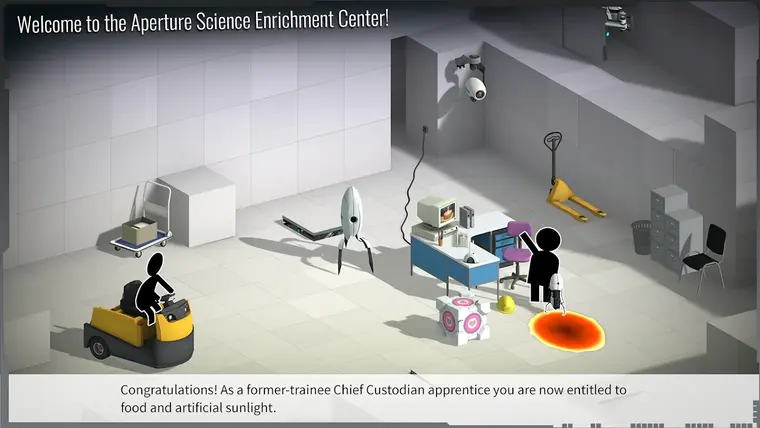
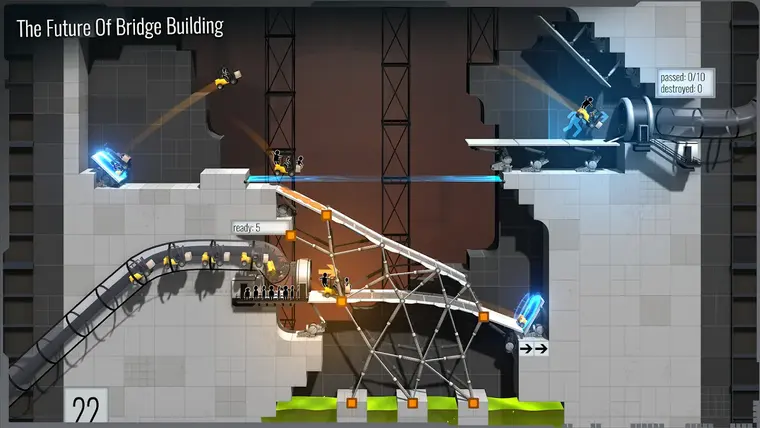
A physics builder wearing the skin of a test chamber. You place beams and cables across a gap, press play, and a convoy of vehicles drives over whatever you built. If the span sags, you watch it sag in real time, and the sag tells you which member was too long.
The portals are not decoration. A vehicle entering one exits the other keeping its speed, which means a bridge can be shorter than the gap it crosses if you route the traffic through a wall. Later chapters add turrets, propulsion gel and buttons that need a vehicle parked on them, and the puzzle stops being structural and becomes a routing problem.
Sixty levels, and the difficulty is honest: the last dozen expect you to have understood everything the first forty taught. Budget matters too, so a bridge that holds is not automatically a bridge that passes.
- Price
- $2.79 CAD
- Advertising
- None
- In-app purchases
- Listed on the store page
- Session
- 5 to 20 minutes per level, with restarts
- Offline
- Plays fully offline once installed
Bridge Constructor Portal on Google Play
Anything the game charges for after installation is listed on that same store page, under in-app purchases.
05Vocabulary
Words these two games use
Both games explain almost nothing in text, so their terms are easier to meet here than in a tutorial.
- Interchange
- In Mini Metro, an upgraded station that lets passengers switch between lines without leaving it. Scarce, and placing one badly costs a whole run.
- Carriage
- An extra car added to a train. Doubles what one train carries without adding a second train to the same crowded line.
- Throughput
- How many passengers a line clears per week. Not shown as a number anywhere; you read it from whether a station is filling up.
- Anchor point
- In Bridge Constructor Portal, a fixed spot in the terrain or wall where a beam may start. Everything you build hangs off these, and there are never enough.
- Load
- The weight the convoy puts on a member as it passes. A beam that survives one car often fails on the third, which is why the game runs the whole convoy.
- Budget
- The material allowance for a level. A bridge that holds but overspends does not count as solved, and this is where most restarts come from.
06Contact
What was read to write this
Every factual claim above came from one of four places, and they are worth separating, because they are not equally reliable.
- The two Canadian Google Play listings, read on 7 September 2026. Price, size, content rating, the in-app purchase label and the last update date come from there and nowhere else.
- The in-game credits and settings screens, for what the games call their own mechanics. Where our vocabulary differs from theirs, theirs is in the glossary.
- Play on a mid-range Android phone. Anything about how a level feels, where the difficulty sits or how long a run takes is this — observation by one person, not measurement.
- Nothing else. No press kits, no aggregated review scores, no other sites.
If one of those four turns out to have been read wrong, the address is [email protected], and the contact page says how quickly Elise gets to it.